
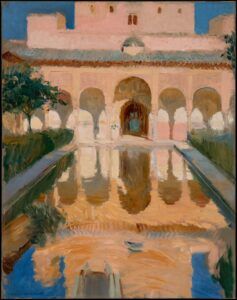
The play of light on the water and against the sun-drenched walls of the Alhambra, one of Spain’s most influential architectural achievements, dovetailed perfectly with Joaquín Sorolla y Bastida’s artistic mission: to explore the changing effects of light under the widest possible range of conditions. Just as the architects of the Alhambra had intertwined light and shadow, stone and water, so Sorolla captured the myriad patterns created by architecture, water, and light together. The shadows of the slender columns against the walls create a reflected pattern in the water, the liquidity of which is remarkable, given the thick, gestural paint Sorolla applied. The thirty-five-acre Alhambra, built between 1238 and 1358, was the last Muslim stronghold in Western Europe in the late Middle Ages. The Moorish architectural style here reached its ultimate refinement, an ethereal fantasy that almost seems to float, despite its solid stone and stucco construction.